
View this Page’s Table of Contents

THE BENEFIT TO YOUR CHURCH
“This Assessment helps your church staff build highly effective ministry teams, dynamically leading your ministry ventures as they represent the Godhead whom they serve.”
The Leadership Style Assessment©
The Leadership Style Assessment© from AssessME.org helps churches build strong leadership teams. We believe that everyone in your church was created by God to have a positive influence. When people learn to use their own Style of Influence (SOI), they can move from being quiet or unsure to understanding that they were made to lead. This helps them find their place and purpose in serving God’s Kingdom.
The creators of AssessME.org believe that churches shouldn’t rely on just one main leader for everything. No single person has all the skills needed for every part of ministry. If that one leader struggles or leaves, the whole ministry can suffer. Instead, we believe the Bible shows that teamwork is stronger—just like it says in Ecclesiastes 4:12, “A cord of three strands is not easily broken.” Our leadership approach builds on that idea. Take a look at the three-strand-cord image below to learn more.

Looking Directly at the Three Strand Cord
As you can see from the image to the left, the specific mix of profiles will vary, depending upon the purpose of the team. How are these leadership types identified? Well, if you turn the three-strand chord so that you look straight toward the strands, this is what you see.
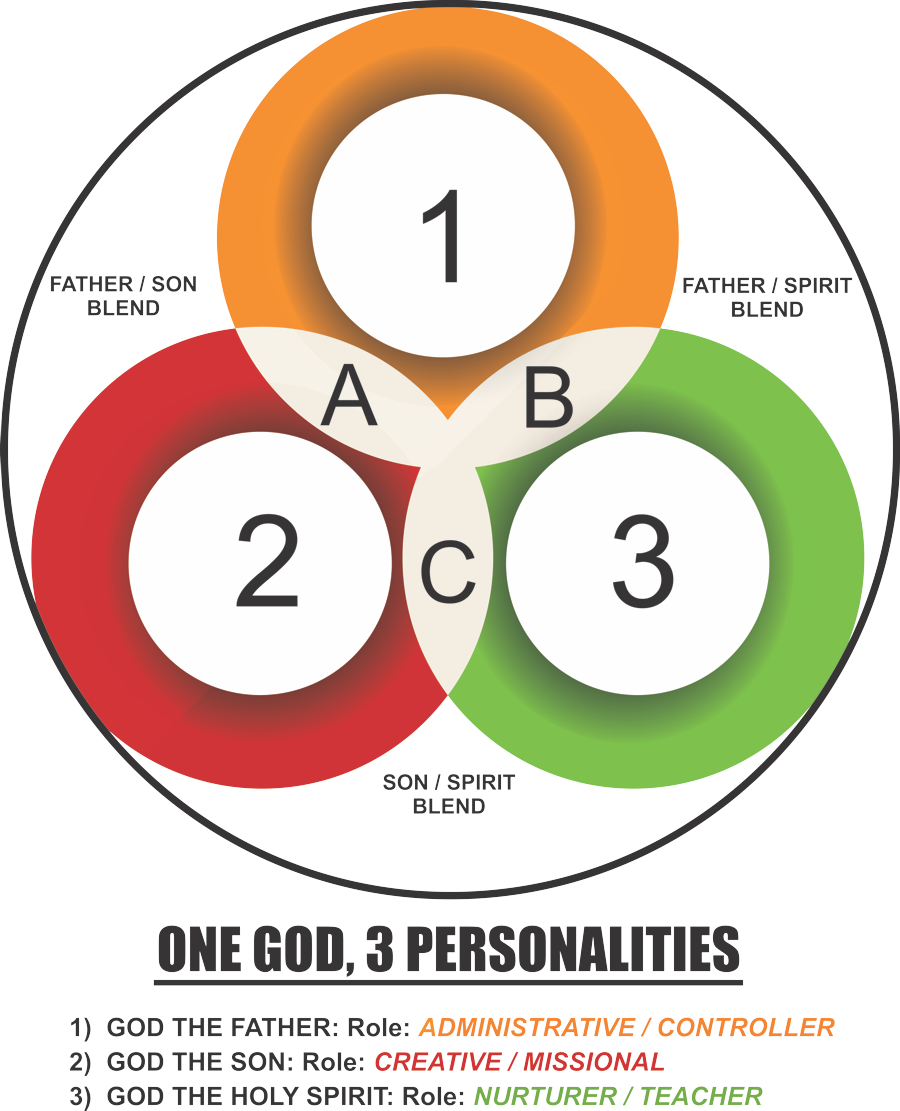
The first Christian temperament models were based on the idea that even though people are different, each of us shows part of God’s image. God is one being, but He is shown in three persons—the Father, the Son, and the Holy Spirit. Each one has a special personality and way of relating to people. They also show different traits in how they act and work with humankind. Let’s take a closer look at these differences.
I) God the Father
The Administrative Manager
Jesus taught us in the Lord’s Prayer to address our needs to God the Father, our Provider. When humanity displays administrative functions, they do so because they emulate God the Father’s nature. This is by design, not accident.
In our Leadership Style Assessment©, we call this category “MANAGERS”. Managers may assess as either Administrative Leaders (i.e., focus on tasks, programs, or systems) or Team Leaders (i.e., focus on people-mobilization and people-management).
II) God the Son
The Creator of All Things & Founder of Our Kingdom Mission
God the Son shows both creative and missional qualities (see Colossians 1:16–20). The Bible says that everything was made through Him. He is missional because He came to earth to teach us, die for our sins, and give us eternal life through His resurrection. While we are still on earth, Jesus has given us a job—to share His message and help others become His followers. He also promises to always be with us as we do this important work (see Hebrews 13:5, John 14:8, Matthew 28:20).
In our Leadership Style Assessment©, we categorize entrepreneurs, missional people, and creatives, as “BUILDERS”. Builders may be divided into two broad categories: Pioneering Leaders, and Strategic Planners.
III) God the Holy Spirit –
The Comforter, Encourager, Teacher & Guide
The Holy Spirit has been called, our ‘Paraclete’. Theologically, this term has come to be understood also as the One who comes along side of us, our Comforter, our Nurturer, and our Guide. Highly social and empathic people emulate the third person of the godhead, the Holy Spirit.
Within the Leadership Style Assessment©, we categorize such people as “NURTURERS”. Nurturers fall into two distinct types: Persons who like to care for groups of other people (i.e., Pastoral Leaders), or persons who prefer to care for other individuals (i.e., Encouraging Leaders).
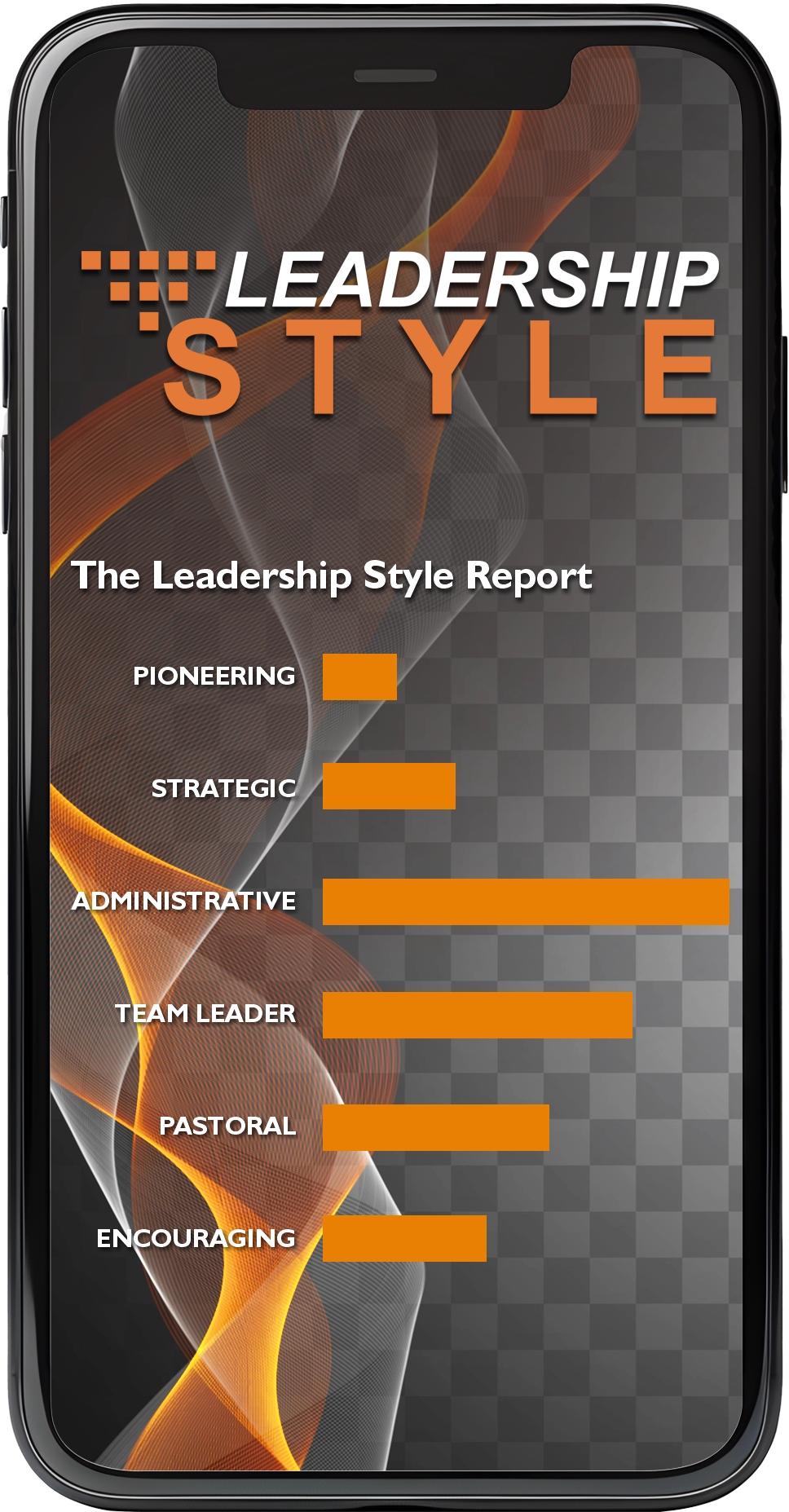
Sample Member & Admin Report
Leadership Style Profile Blends
In our image of the Trinity, the three circles overlap, representing areas where trait blends may exist between members of the godhead. Certainly, these trait-blends exist within humanity….
Natural Blends
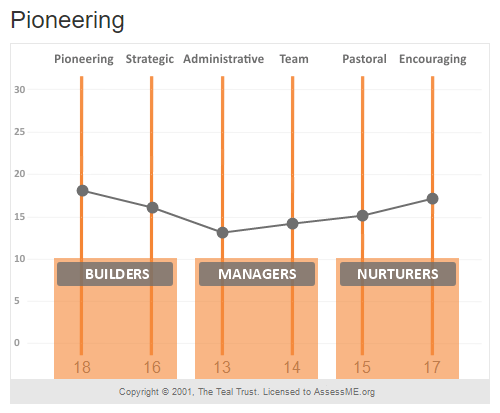
Our assessment highlights these Natural Blends when a dominant score, like in our example of the Pioneering Leader to the right, aligns closely with a secondary score from a near-related profile-type across the continuum. We refer to these as ‘Natural Blends‘. As our assessment plots each person’s scores across the leadership style continuum, someone scoring high as a Pioneer, and yet secondarily assessed as a Strategic, would be considered a Natural Pioneer/Strategic Blend. Refer to the graphic below for a visual representation…
Unnatural Blends
A common Unnatural blend: Although the Pioneering Leader in the above example scores high in “Encouraging“, it doesn’t mean they possess true Encouraging Leader traits. The combination of “Pioneering” and “Encouraging” is termed an ‘Unnatural Blend‘ because these leadership styles are not closely related on the Leadership Style continuum.
Pioneering Leaders excel in articulating a grand vision, and often can identify the many types of people needed to execute it. This ability makes them adept recruiters and mobilizers of people into ministry service. This kind of support often generates a strong score in the “Encouraging” category.
In contrast, true Encouraging Leaders possess strong relational and empathic abilities. Whereas, Pioneering Leaders are task-driven with the singular goal of transforming their vision into a reality. They can be relational within the context of helping people accomplish the ministry vision, but they are not naturally social. Learn more about implementing the Leadership Style Assessment© by reading Made for a Mission, authored by our systems designer, David A Posthuma.
Intentional Succession Planning
How your church leaders formulate leadership teams is determined by asking: “Will this leadership team create NEW programs, systems, or churches? Or, will they manage EXISTING programs/churches?”. Accordingly, the team construct will look like one of the following…
Succession Planning for New Ministry Development
- A Pioneering Leader to cast vision, recruit people, and manage the project.
- A Strategic Planner (or Administrator if the Pioneer has Strategic skills) to design the project blueprint and manage details/tasks.
- A Pastoral Leader to provide spiritual/emotional care for team members, and for the people they serve.
Succession Planning for Established Ministry Management
- A Team Leader succeeds a Pioneering Leader to manage the people and the established program or church.
- An Administrative Leader succeeds the Strategic Planner to address the ongoing management details.
- A Pastoral Leader remains to provide ongoing spiritual/emotional care for team members, and for the people they serve.
Succession planning means intentionally preparing for a leadership change. This should usually happen about three to five years after starting a new ministry or church. Pioneering Leaders do best in big, exciting projects. They can lead longer when the project is large, but may start to feel frustrated when everyday administrative tasks take over and the original vision-momentum slows down. At that point, they often want to move on to start something new.
Good church leaders can see this coming and talk about it at early stages with everyone involved. They help people understand that a new leader will be a good thing for the ministry and for everyone in it. Succession planning should follow this same thoughtful process.
- Pioneering Leaders are usually followed by a trained Team Leader who is good at working with people and helping the ministry grow more slowly and steadily so it can become stable.
- Strategic Planners are replaced by a trained Administrative Leader who can take the ministry’s plan and handle the daily work that keeps it running. Strategic Planners are like architects—they enjoy making the big vision and plan, but they don’t like dealing with the day-to-day management once it’s in place.
- In most cases, Pastoral Leaders stay on the leadership team as Nurturing Leaders, helping everyone adjust to the changes and keeping things peaceful during the leadership transition.
Leadership Style Overview Video

Our Philosophy of Ministry
To learn more about our philosophy of ministry, please visit our Ministry Philosophy page for greater details.